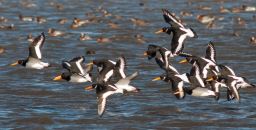
High Tide 3.60m @ 20:59, Sunset 17:51, Rendezvous 17:00
After a successful catch of waders in early February on a field adjacent to RSPB Exminster Marshes Reserve, a second attempt on the same field and on RSPB Exminster Marshes Reserve was eagerly anticipated.
With a new moon on the 23 February and high tides several hours after sunset, the entire week of the 24-28 February appeared suitable. However, stormy weather conditions predominated, restricting our options. Winds were forecast to relent for a short while on Thursday evening, so a session was planned and a team assembled. In the event conditons were near perfect for mist-netting. The objective of the session was to target Curlew and continue colour-ringing of this species on the Exe, to add to the 7 birds already colour-ringed.
Due to the later sunset time of 17:51 and larger team as well a new familiarity with the site, the team assembled 2 hours later than last trip, this time meeting at 17:00. On arrival 21 curlews were located feeding on field 13 (left field, non-RSPB), before these lifted over onto the marsh. A near identical net set to early February was put up, with 2-shelf nets set on 2 large freshwater pools. With and increased team of 9 ringers and 5 helpers we had the ability to also set nets in field 14 (right field, RSPB). This field comprised of a series of fantastic new habitat recently created by the RSPB, with engineered scrapes and ridges running between pools. Two lines of full height wader nets were set around these scrapes.
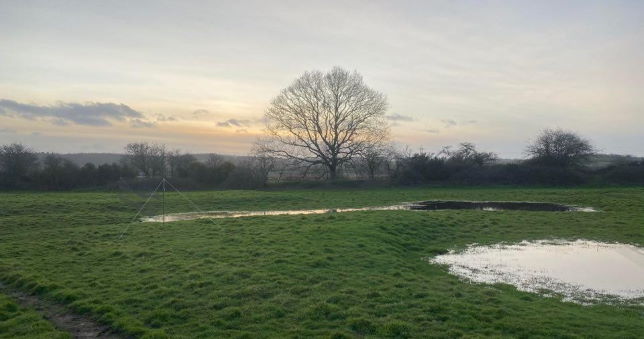 Nets set in field 13, Exminster Marshes
With dusk pretty much over by the time nets were set, the sounds-lures were put out and the first net round conducted. This produced a surprise of 7 Curlew coming in to roost early, which were quickly ringed, colour-ringed and released. Soon after this we had a second round producing a further 2 Curlew one from each field and 8 godwit. From this point on from each net round up to and beyond high tide we ringed small numbers of waders plus two Wigeon and a Mallard.
All 9 curlew were colour ringed taking the group total to 16 marked birds and the late addition dunlins added two more to the colour-ring study. Curlew were all aged as adult and the rest of the waders made up a mix of both first winter and adult birds in a 50/50 split. The mallard was an adult female and both wigeon adult males. No Curlew were fitted with GPS-GSM tags during this session as these will be saved for tagging of more birds in subsequent winters.
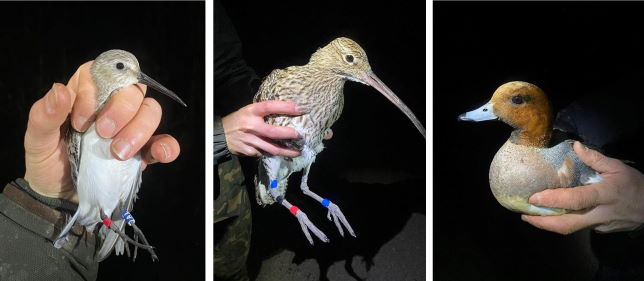 Adult Dunlin, adult female Curlew and adult male Wigeon
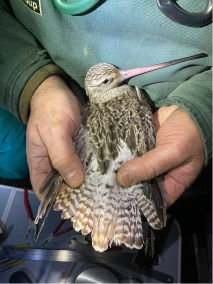 Juvenile Bar-tailed GodwitThis session produced excellent results and based on the colour-ring recoveries by our committed resighters so far will contribute excellent resighting data for future survival analyses. With a large team and a large range of expertise this session gave us the opportunity to undertake training of new DCWRG members and involve RSPB staff in the ringing process. The RSPB team’s enthusiasm and passion for waders matched our own, with discussions about how the data colour ringing and tagging can improve our understanding wader special ecology, survival and how waders use the wetlands and marsh around the Exe Estuary. Thanks, must go to the RSPB and David King for allowing us permission of operate on their land, for supporting our projects and the expansion of our knowledge of waders in the Exe Estuary.